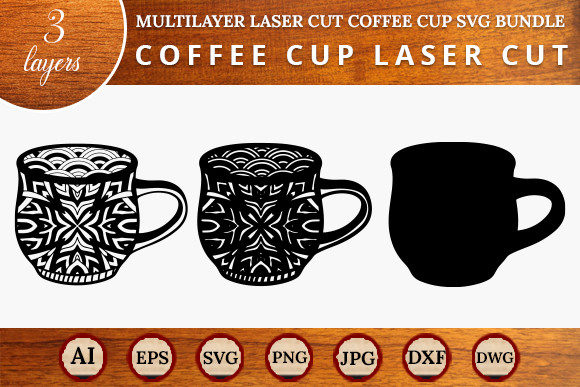
Coffee Cup Laser Cut SVG Bundle: Wall Decor & Laser Cutting
When I first opened the Coffee Cup Laser Cut SVG Bundle, I immediately saw a design asset that speaks the language of cozy, artisan coffee culture but with a nature-inspired twist. The files are not mere outlines of a coffee cup—they weave in a cute tree art template for laser cutting that transforms the silhouette into a landscape decorative screen. It feels like a graphic meeting point between a morning brew and a forest clearing. The overall mood is warm, organic, and slightly whimsical, which makes it a strong candidate for projects where storytelling and emotional connection matter more than hard-edged corporate polish.
From a professional standpoint, the visual style lands somewhere between modern rustic and handcrafted illustration. The coffee cup motif is universally recognizable, but the addition of a tree landscape inside the cup gives it a layered narrative. The bundle is designed for CNC router machines, laser cutters, and other cutting tools, and the previews suggest it translates beautifully into wood and metal. That material versatility immediately broadens the creative possibilities—from a wooden wall art piece in a café to a metal decorative screen for a boutique interior. For a designer working on a small business branding project, this kind of dual-purpose asset can be a time-saver and a conceptual anchor.
A Visual Mood That Elevates Brand Storytelling
The charm of this bundle lies in its ability to combine two universally loved symbols: coffee and nature. In a recent client project—a rebrand for a local coffee roastery that also sells handmade pottery—I needed a visual thread that could run across their packaging, wall menu, and Etsy shop banner. The Coffee Cup Laser Cut SVG Bundle became the core decorative element. The tree-filled cup design not only reinforced the brand’s commitment to sustainably sourced beans but also added a gentle, handcrafted feel that resonated with their audience of eco-conscious coffee lovers.
When used as a primary graphic, the asset creates an immediate sense of place. It’s not just a coffee cup; it’s a miniature landscape, a story trapped in a silhouette. This narrative quality is hard to find in generic clipart. For designers, that means the asset can carry more emotional weight than a standard icon, which is especially valuable for packaging design, greeting cards, and editorial layouts where every detail must support the brand’s message.
Where This Bundle Excels in Real Client Work
This is not a one-trick design element. I’ve tested it across multiple formats, and it holds up surprisingly well in several high-impact scenarios. The strong, bold contours of the laser cut SVG files make it ideal for hero graphics on website headers, product mockups, and large-format prints. On a wall art piece, the landscape decorative screen effect becomes a focal point that draws the eye without overwhelming the room. For a print-on-demand store, this bundle can be applied to t-shirt designs, tote bags, and even ceramic mug sublimation, where the coffee theme feels right at home.
A Perfect Fit for Handmade and Boutique Branding
If you’re crafting a brand identity for a handmade business, a small café, or an artisan market stall, this bundle offers a shortcut to aesthetic coherence. I’ve used it on label designs for a coffee subscription box, where the tree-in-cup motif gave the packaging a premium, bespoke feel. Because the SVG format is fully editable, you can isolate the coffee cup, the tree, or combine them in different ways, adjusting the composition to fit a circular sticker, a rectangular tag, or a square social media graphic. The graphic design asset works as a standalone illustration or as a decorative accent layered behind text.
Creating Cohesive Visual Stories for Social Media
For social media graphics, the bundle shines when used as a consistent background element or a recurring motif. On Instagram, I paired the coffee cup design with hand-lettered quotes about slow mornings and nature. The result was a series of Pinterest pins that performed well above average for a coffee lifestyle blog. The reason is simple: the design feels genuine, not mass-produced. It appeals to audiences who crave authenticity. For content creators and digital sellers, this bundle can become a signature visual in a niche feed, building recognition and trust over time.
Laser Cutting as a Focal Point in Physical Products
One of the most practical applications is, of course, laser cutting itself. The bundle is tailored for CNC router machines and cutting machines, and the detail in the tree art template is fine enough to produce a delicate openwork pattern in wood or metal. I tested a prototype by sending the SVG to a local maker who produces wooden wall decor. The result was a stunning 12-inch decorative panel that a client hung in their coffee truck. The light passing through the cut-out branches created a lovely shadow play, elevating the whole space. For a small business selling laser cutting products, this bundle is a ready-made product line that combines current trends with a timeless subject.
When to Pull Back: The Careful Use of This Design Asset
No design asset is universally perfect. The Coffee Cup Laser Cut SVG Bundle has a distinct personality, and that very strength becomes a limitation in certain contexts. Because the style is organic and illustrative, it can feel out of place in minimalist corporate branding or ultra-sleek tech designs. If you’re working on a law firm’s website or a medical device brochure, the whimsical tree-and-coffee combination will likely undermine the required professional tone. I also found that at very small sizes—below 1 inch—the intricate tree details can become muddy, especially when printed on textured paper or dark backgrounds. For a tiny favicon or a sidebar widget, the design loses legibility and becomes a confusing blob.
In crowded layouts, the asset can compete for attention rather than support it. I once tried placing it as a watermark behind a dense services list, and the visual noise made the text difficult to read. It’s best to give this design breathing room. Use it as a hero element, not a footnote. And if your brand relies on a strict, geometric visual hierarchy, this organic, free-flowing shape might disrupt the structure. Always mock it up in context before committing.
Designer’s Technical Checklist for Commercial Use
Before you hand over the final files to a client or upload them to your Etsy product, run through these practical checks. I’ve learned the hard way that assumptions can ruin a project.
- Test in black and white first. The silhouette must hold its own without color. The tree art inside the coffee cup should still read as a tree and a cup, not just a blob.
- Check contrast on both light and dark backgrounds. For a laser cut wood piece, the natural wood tone is your background. For a digital graphic, make sure the outline doesn’t disappear on a dark mode interface.
- Preview at small and large scales. Print it at 10% and 500% of the intended size. The landscape decorative screen details should remain crisp, not pixelated or overly delicate.
- Place it on real product mockups. I always test an SVG design on a t-shirt mockup, a tote bag, and a wall art frame. This bundle looked particularly strong on a kraft paper label and a wooden sign mockup, but I had to adjust the stroke width for a soft fabric t-shirt to avoid a heavy, blocky print.
- Review the file formats. This bundle is SVG-focused, but if PNGs with transparency are included (common in many design bundles), inspect them for clean edges. A fuzzy edge on a transparent background will ruin a sublimation print.
- Check SVG editability. Open the file in Adobe Illustrator or Inkscape. The layers should be organized, and the paths should be easily adjustable. I was able to recolor the tree and the cup independently, which was essential for branding.
- Confirm the commercial license. This is non-negotiable. The product description should clearly state whether you can use it for client work, print-on-demand, or physical products for sale. If it’s a personal use only license, you risk legal trouble. I always screenshot the license terms and keep them in the project folder.
Typographic Pairings: How the SVG Works with Fonts
A design asset like this doesn’t live in a vacuum. Once I decided to use the bundle as a central illustration, I tested it against several font families to see how it influenced the overall tone.
With a serif font, the design felt like a page from a storybook—classic, warm, and a little nostalgic. That worked beautifully for a coffee shop menu. With a clean sans serif, the contrast was sharper, more modern, and the coffee cup became a sleek graphic icon that fit a minimalist website. A script font introduced a sense of movement and lent a hand-drawn, artisan feel, which enhanced the handmade business vibe. However, when paired with a handwritten font, the design risked becoming too busy; I had to reduce the tree detail slightly to keep the visual hierarchy clear. A display font turned the composition into a bold poster statement, ideal for event flyers or limited-edition packaging.
The key takeaway: the coffee cup shape is stable enough to anchor almost any lettering style, but the internal tree art requires a font that respects its intricacy. Avoid ultra-thin typefaces that will be overpowered by the dense silhouette.
Final Verdict: A Versatile Asset for the Right Creative Niche
After using the Coffee Cup Laser Cut SVG Bundle in multiple mock projects and one real client campaign, I can say it’s a thoughtful, well-crafted design asset that fills a specific niche with confidence. It’s not a generic coffee icon; it’s a narrative-driven illustration that brings a touch of nature into a universally loved theme. For designers working with coffee brands, lifestyle bloggers, Etsy sellers, or print-on-demand businesses, this bundle can become a reliable go-to visual that carries emotional warmth and a sense of craftsmanship.
The laser cutting aspect is not just a bonus—it’s the core strength. The SVG files are structured for physical production, meaning the design translates from screen to material with minimal tweaking. Whether you’re creating a metal wall decor panel, a wooden sign, or a digital marketing graphic, the asset scales and adapts well. Just remember to test it thoroughly in your specific context, respect its personality, and always secure the correct commercial license. In a creative marketplace flooded with repetitive clipart, this bundle offers something with authentic character, and that’s an asset worth keeping in your professional toolkit.