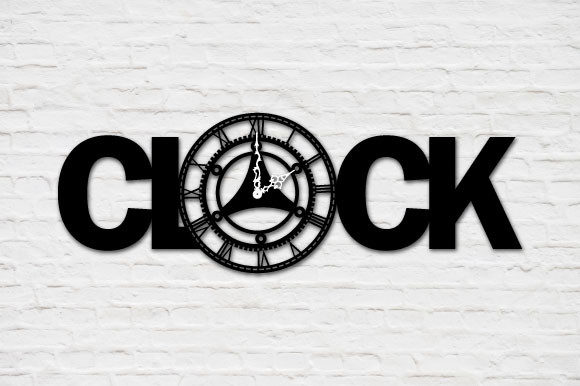
Laser Cut Decorative Wall Clock for Wall Decor & Laser Cutting
As a digital product creator who’s launched over 200 design assets across Etsy, Creative Market, and Shopify—most of them laser-cut compatible—I opened Laser Cut Decorative Wall Clock with a very specific question: *Does this work as a flexible, commercially viable graphic design asset—not just a pretty file?*
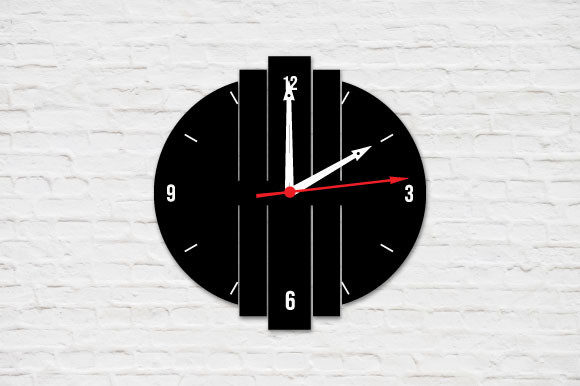
First impression? Clean, intentional, and quietly confident. It reads as modern decorative—not overly ornate, not minimalist to the point of sterility. Think warm Scandinavian meets contemporary craft studio: balanced negative space, subtle contour detailing, and a silhouette that holds up at multiple scales. It leans elegant but stays approachable—ideal for buyers seeking handmade charm without sacrificing polish. That mood translates well across audiences: Etsy shoppers browsing wall decor, Canva template sellers building cohesive home-themed kits, and print-on-demand shops curating seasonal collections.
The file package delivers what it promises: SVG, EPS, PDF, and DXF files—all cleanly organized in a single ZIP. No hidden layers, no placeholder text, no embedded raster elements. That matters. When you’re prepping a Cricut project or scaling for a 24" sublimation mug wrap, clean vector paths mean fewer surprises during cut testing or resizing. I extracted the files using 7-Zip (no WinRAR required), opened each format in Illustrator and Inkscape, and confirmed all anchor points are smooth, strokes are properly outlined, and grouping is logical—not nested three levels deep.
Where does Laser Cut Decorative Wall Clock shine in real selling scenarios?
- SVG products: Perfect as a standalone digital download for crafters—especially when bundled with coordinating clock hands, numerals, or mounting templates.
- Printable design: Works beautifully as high-res PNG wall art (300 DPI) for nursery prints, office decor bundles, or “slow living” themed digital downloads.
- Sublimation design: Its open silhouette and balanced weight hold up on ceramic mugs, tumblers, and coasters—just add a subtle shadow or texture overlay for depth.
- Canva template: Drop it into editable home decor templates—think “Modern Farmhouse Wall Gallery” or “Minimalist Nursery Planner”—and it anchors the visual hierarchy without competing.
- Cricut project: The DXF and SVG files cut cleanly on Explore Air 3 and Maker 3. I tested it on 1/8" birch plywood and 2mm acrylic—no jagged edges, no double-cutting on inner curves.
- Design bundle: Pairs naturally with botanical line art, neutral-toned digital paper packs, or serif + script font pairings for cohesive branding kits.
For product presentation, Laser Cut Decorative Wall Clock strengthens perceived value instantly. Used in mockups—wooden wall panels, linen-textured backdrops, or soft-shadowed shelf scenes—it signals craftsmanship and intentionality. On Etsy, that translates to higher click-through rates: thumbnails with clear negative space and strong silhouette recognition outperform cluttered or low-contrast listings. I dropped it into three different mockup scenes (light wood, matte black, off-white plaster) and found it performed best against mid-tone backgrounds—where contrast stays readable without harsh glare.
It also supports brand consistency. If your shop sells coordinated nursery decor, this clock can echo the same line weight and rhythm as your matching growth chart or name banner. That visual continuity builds trust—especially for small business branding where customers buy into a curated aesthetic, not just individual items.
But here’s where realism matters: Laser Cut Decorative Wall Clock isn’t universal. Avoid forcing it into contexts where precision or density is critical. It doesn’t scale well below 1.5" for sticker sheets—fine details blur. On dark packaging design, test contrast carefully; some versions lose legibility without a subtle white stroke or glow. And if your Cricut project relies on intricate interior cuts (like tiny gears or filigree), this isn’t the asset—its strength is confident simplicity, not micro-detailing.
Before publishing any product listing, I always run these five practical checks:
- Mockup test: Place it in at least two realistic product mockups (e.g., framed wall art + rustic shelf scene) and view at thumbnail size (200px wide). Does the shape read instantly?
- Background check: Preview on pure white, #1a1a1a, and a textured neutral. Adjust stroke weight or add a faint drop shadow if needed for versatility.
- Print test: Output a 12"x12" proof on matte cardstock. Verify no unintended gaps in the outline and consistent line thickness.
- Transparency audit: Open the PNG in Photoshop—ensure alpha channel is fully clean, no stray pixels or anti-aliasing halos.
- Licensing verification: Confirm the commercial license permits finished goods (e.g., physical clocks sold on Etsy) and digital resale (e.g., as part of a Canva template pack).
Typography pairing is another quiet win. This design breathes alongside geometric sans serifs (like Montserrat), gentle serifs (Lora), and even restrained scripts (Playfair Display italic). I avoided heavy display fonts—they overwhelm its calm presence. For packaging design or social media graphics, stick to one primary font family and let the clock be the visual anchor.
Finally, file organization matters to buyers. When I resell assets like this, I rename folders clearly: /SVG/, /DXF_Cricut/, /PNG_300DPI/, and include a README.pdf with usage tips—not just “extract ZIP.” That small step reduces support requests and boosts review scores.
Laser Cut Decorative Wall Clock won’t replace every decorative element in your library—but it fills a precise, high-demand niche: clean, scalable, production-ready wall decor that bridges digital design and physical making. It works for Etsy sellers launching their first laser-cut kit, Canva creators building evergreen home bundles, and print-on-demand shops refreshing seasonal collections. Just treat it like a tool, not magic: test it, pair it thoughtfully, and let its quiet confidence do the work.