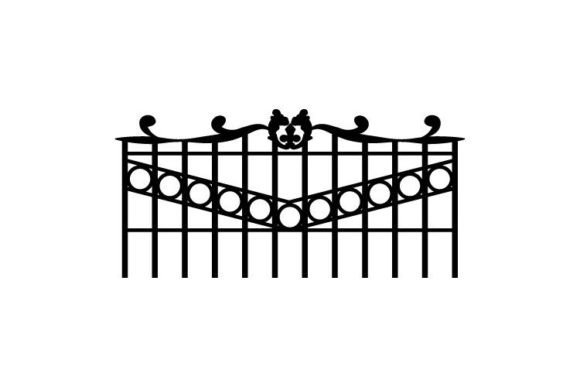
Metal Fence Clipart Design Vector Isolat
Let’s be real: not every decorative vector translates well to thread and fabric. As someone who’s stitched hundreds of custom pieces—from nursery wall hangings to boutique aprons—I opened Metal Fence Clipart Design Vector Isolat expecting a clean, scalable fence motif, but what I found was something more nuanced: a balanced blend of structure and subtlety that actually *works* in embroidery—not just on screen.
I tested it first on a linen-cotton tea towel for a small-batch kitchen goods line. The design landed exactly where it needed to: grounded but not heavy, architectural but not cold. It reads as “fence” without leaning into cliché—no barbed wire, no rusted iron tropes. Just clean verticals and horizontal rails, spaced with breathing room. That spacing? Critical. It gives your machine room to breathe, avoids thread nesting, and keeps the stitch-out legible even at modest sizes (think 3.5"–4.5" wide).
Where This Design Feels Like Home
Metal Fence Clipart Design Vector Isolat shines brightest when used as a framing device or subtle background rhythm—not as a standalone focal point. On a baby onesie? Perfect as a border along the hem or cuff. On a denim tote? Ideal scaled down and repeated as a tonal border near the strap seam. As an embroidered patch? It holds up beautifully when digitized with satin-stitched rails and clean fill-stitch infill—especially if you keep the overall height under 2.75".
It’s also a quiet win for holiday or wedding-adjacent items. Think: a neutral-toned linen pillow cover for a farmhouse-style bridal shower, or a minimalist sweatshirt for a garden party. Because it’s vector-isolated, you can easily recolor it digitally before digitizing—so whether you’re stitching in charcoal gray thread on oatmeal fleece or crisp white on navy twill, the shape remains sharp and intentional.
What to Watch For—Before You Stitch
This isn’t a “drop-in-and-stitch” design for every scenario. Here’s where attention pays off:
- Small hoop sizes: Don’t force it below 2.25" wide without checking detail retention. Those thin vertical elements can blur or vanish in dense fill areas if scaled too aggressively.
- Textured or stretchy fabrics: On terry cloth towels or lightweight knits, use medium-weight cutaway stabilizer—and consider simplifying rails to running stitch outlines instead of full satin columns. Too much density + texture = puckering.
- Dark or heavily printed backgrounds: Since this is a decorative element, not a bold graphic, contrast matters. Test thread colors against your base fabric in natural light—not just on screen. A matte charcoal thread on black denim may disappear; a heathered gray on cream linen sings.
- Curved surfaces like caps: The linear geometry works, but avoid placing it across the crown seam. Center it on the front panel, and reduce height by 10–15% to accommodate curvature without distortion.
How It Shapes Perception—Beyond the Stitch
Here’s what clients and customers actually notice (even if they don’t say it out loud):
- Professionalism: Clean lines read as intentional, not generic. When used on an Etsy listing for handmade aprons, Metal Fence Clipart Design Vector Isolat subtly signals “designed with care”—not dragged from a clipart bundle.
- Brand consistency: Its neutral, structural vibe pairs well with earthy palettes, serif typography, and hand-drawn accents. It doesn’t compete—it supports.
- Giftability: On a personalized baby blanket or a monogrammed kitchen towel, it adds quiet sophistication without overwhelming sentiment. Customers report higher perceived value on items where the design feels “curated,” not crowded.
- Recognition: It’s distinctive enough to become part of your shop’s visual shorthand—especially when repeated across product types (e.g., matching tea towel + oven mitt + market bag).
Practical Designer Notes—From My Hoop to Yours
Before you commit to a production run or list a finished product:
- Test on scrap fabric *first*—same weight, same weave, same stabilizer as your final piece.
- Check stitch density in the rail sections. If your digitizer packed in too many passes, lighten fill stitch density by 10–15% for breathability.
- Review corners and end points: do they taper cleanly? Or do they leave tiny thread anchors that’ll snag on washing? Trim those manually if needed.
- Mock it up in both black and white versions—even if you plan to stitch in ecru. This reveals contrast issues invisible on RGB screens.
- Confirm licensing terms. As a graphics file delivered in AI, EPS, SVG, PNG, and JPG, it’s built for flexibility—but commercial embroidery rights aren’t automatic. Verify before selling stitched items or bundling into digital embroidery files.
- Ask: does this elevate the *handmade product*, or distract from it? On a delicate baby embroidery project, less is more. Let the fence frame the name—not compete with it.
Bottom line? Metal Fence Clipart Design Vector Isolat isn’t flashy—but it’s reliable. It’s the kind of decorative element that earns repeat use because it behaves. It stitches cleanly, scales thoughtfully, and supports storytelling instead of shouting over it. Whether you’re prepping for a craft fair, building an Etsy collection, or designing custom apparel for a local café, this one earns its place in your working library—not as filler, but as foundation.
Just remember: vectors are starting points. What makes Metal Fence Clipart Design Vector Isolat valuable isn’t the file itself—it’s how intentionally you choose to translate its structure into thread, texture, and trust.