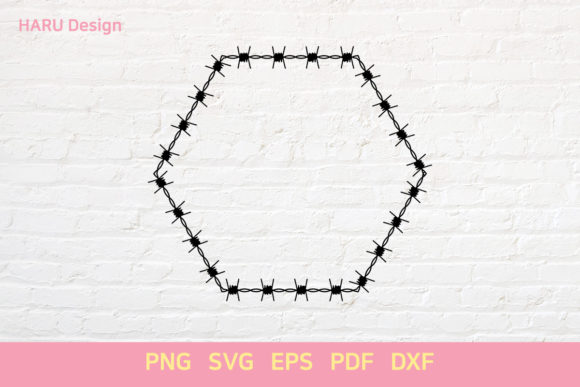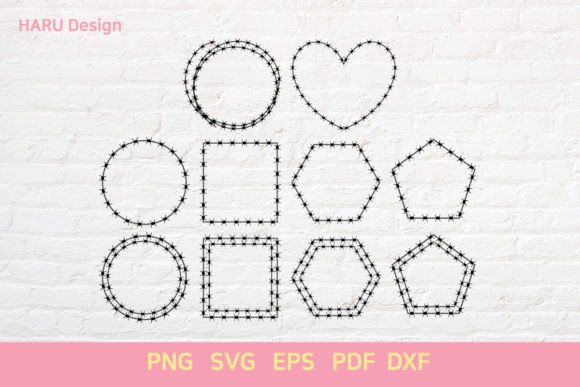
Barbed Wire Shape: Decorative Elements for Bold Brand Graphics
As a brand designer who’s helped over 80 local businesses refine their visual identity—from craft breweries in Asheville to handmade soap studios in Portland—I recently evaluated Barbed Wire Shape for a real-world project: rebranding a small-batch candle company with a rugged, earthy, slightly rebellious personality. Right out of the gate, this graphic design asset delivers strong tonal clarity. It’s not sweet or dainty—it’s textured, intentional, and quietly assertive. The lines are clean but carry weight; the spacing feels deliberate, not accidental. It reads as handmade yet professional, rustic without leaning into cliché, and decorative without sacrificing versatility. For small business branding, that balance is rare—and valuable.
Where Barbed Wire Shape Fits (and Why It Fits Well)
This isn’t a one-size-fits-all clipart piece. It works best where you want to signal authenticity, groundedness, or quiet strength—think artisanal food labels, apothecary packaging, boutique apparel hang tags, or seasonal campaign banners for a home decor shop launching a “Wild & Woven” fall collection. We used it on the candle brand’s soy wax jar labels—not as the logo, but as a subtle border element beneath the product name. Instantly, it elevated shelf appeal: customers paused longer, and retailers noted how “cohesive and confident” the line looked next to competitors’ softer, over-illustrated designs.
In packaging design, Barbed Wire Shape shines as a repeating accent—along the spine of a gift box, framing a product mockup in Instagram ads, or embossed lightly on kraft paper thank-you cards. Its consistent 12-inch artboard size means scaling is predictable across formats: no pixelation on large-print posters, no distortion when reduced to a 0.5-inch sticker on a lavender sachet pouch. As a decorative element, it supports stronger visual hierarchy—guiding the eye *around* key information rather than competing with it.
Real Local Business Uses That Deliver Results
- Product labels: Adds tactile rhythm to ingredient lists or origin stories without overwhelming text density.
- Packaging accents: Works beautifully as foil-stamped trim on rigid boxes or debossed detail on recycled mailers.
- Social media graphics: Scales cleanly for Instagram carousels, Pinterest pins, and Facebook event banners—especially when paired with warm neutrals or deep indigo brand palettes.
- Printable inserts: Used as a corner motif on recipe cards inside a local coffee roaster’s subscription box—customers saved them, shared them, and tagged the brand.
- Seasonal campaigns: Adapted into snow-dusted versions for winter markets or layered with dried florals for spring pop-ups—proving its flexibility beyond literal “barbed” connotations.
Where to Use Barbed Wire Shape Thoughtfully
It’s powerful—but power needs context. Avoid placing it directly beside legal disclaimers, tiny nutrition facts, or fine-print certifications. Its presence commands attention, so it can unintentionally weaken readability in dense, regulatory-heavy layouts. Similarly, it doesn’t serve luxury minimalist brands well—if your aesthetic lives in Swiss typography and unbleached linen, this graphic design asset will feel tonally dissonant. And while it’s highly editable as an SVG or EPS file, don’t assume it’ll work at sub-0.25-inch sizes on small product stickers without testing: some line weights collapse or blur in print preview.
Practical Brand Designer Notes You Can Apply Today
Before committing to Barbed Wire Shape in your next local business project, run these checks:
- Test it on a real product mockup—not just screen previews—especially if you’re using it on curved surfaces like jars or tumblers.
- Check black-and-white usage: Does it retain character when printed in single-color letterpress or screen printing? (Spoiler: Yes—its contrast holds up.)
- Preview it at actual label size: Print a 1:1 version on your intended substrate (e.g., matte vinyl, uncoated paper) to assess texture and legibility.
- Test it with your full brand font stack: It pairs strongly with sturdy serifs (like Playfair Display), grounded sans-serifs (Inter, Montserrat), and even restrained script fonts—but avoid pairing it with overly delicate or bubbly handwritten styles.
- Confirm commercial licensing: This is non-negotiable for small business branding. Verify the license permits physical product sales, digital marketing visuals, and client-facing deliverables—not just personal use.
- Inspect SVG paths: Clean vectors mean easy recoloring in Illustrator or Figma. Look for unnecessary anchor points or inconsistent stroke alignment before scaling.
- Compare against competitor packaging: Does it help your product stand out—or blend in? In our candle test, it created instant category distinction among 12+ local makers.
Why This Matters for Small Business Branding
For local business owners, handmade sellers, and creative entrepreneurs, every design decision impacts perception before a single word is read. Barbed Wire Shape isn’t just decoration—it’s a strategic tool for building customer trust through consistency, reinforcing product recognition across touchpoints, and elevating packaging from functional to memorable. When used intentionally—as part of a broader brand identity system—it helps tell a cohesive story: one of craftsmanship, intention, and quiet confidence. That’s why it earned a permanent spot in my working toolkit for food labels, boutique visuals, social media graphics, and editorial design projects where authenticity matters more than ornamentation.
Final Thought: Decoration With Direction
Great decorative elements don’t just fill space—they support meaning. Barbed Wire Shape does exactly that: it adds texture without noise, structure without rigidity, and character without clutter. Whether you're designing for a farmers’ market jam brand, a ceramic studio’s holiday collection, or a neighborhood florist’s limited-edition greeting cards, this graphic design asset delivers professional branding depth—without demanding complex execution. Just remember: the strongest small business branding comes not from adding more, but from choosing wisely. And in the world of scalable, versatile, commercially licensed design assets, Barbed Wire Shape earns its place—not as filler, but as foundation.