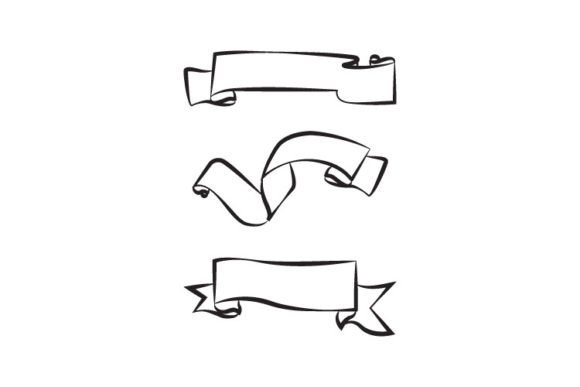
Scrolling Ribbon Banner Clipart Outline
A Designer’s First Look: Graceful, Not Fussy
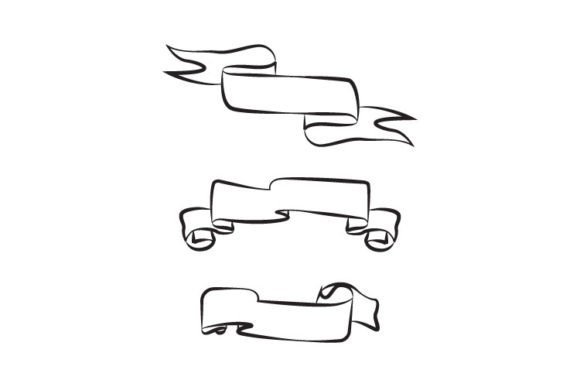
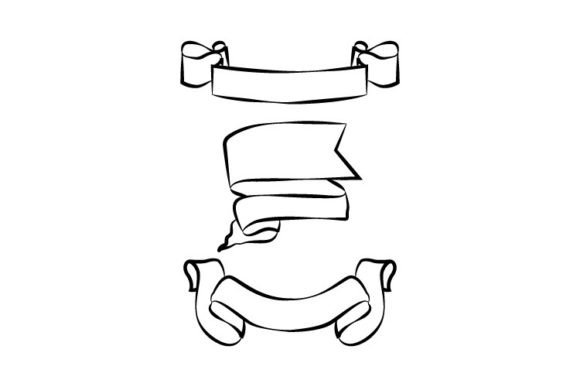
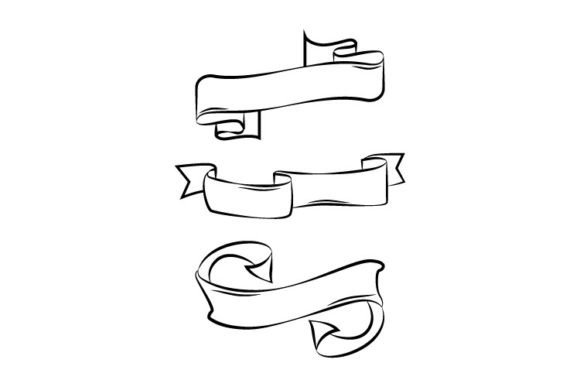
When I opened the Scrolling Ribbon Banner Clipart Outline for the first time, what struck me wasn’t complexity—it was quiet confidence. The line work flows with a gentle, organic curve—not stiff or symmetrical, but like ribbon caught mid-unfurl. It reads as elegant without being formal, decorative without overwhelming. That’s rare in vector-based decorative elements meant for embroidery adaptation. As a designer who’s turned hundreds of graphics into machine embroidery designs, I immediately pictured it stitched on a linen tea towel for a boutique kitchen line—or arcing softly across the chest of a baby onesie as part of a personalized welcome gift. Its strength lies in its restraint: no dense fills, no fragile filigree, just a clean, scalable outline that invites thoughtful stitching.
Where It Shines in Real Embroidery Projects
I tested the Scrolling Ribbon Banner Clipart Outline across three real projects: a custom embroidered cotton tote bag for a local florist, a set of nursery pillow covers for an Etsy seller, and a small-batch run of unisex sweatshirts for a craft fair pop-up. In every case, it held up beautifully—especially when used as a subtle frame for monogrammed initials or a short phrase like “Little One” or “Gather & Grow.”
- Custom apparel: On midweight cotton sweatshirts, the outline translated cleanly into satin stitch borders—no skipped stitches, no thread nesting. The natural curve helped guide the needle smoothly around gentle bends.
- Embroidered patch: When digitized as a standalone appliqué design with a clean satin edge, it looked polished and intentional—not like a clipart afterthought.
- Baby embroidery: On soft knit onesies, the open shape minimized bulk. Paired with lightweight stabilizer, it stayed flat through washing—critical for heirloom-quality handmade product.
- Holiday embroidery & wedding gifts: Its neutral elegance made it equally at home on Christmas stockings (“Joy”) and linen napkins (“Celebrate”). No seasonal clichés—just timeless structure.
Where to Proceed With Care
This isn’t a one-size-fits-all graphic—and that’s a good thing. Its graceful scroll demands intention. Avoid forcing it onto surfaces where curvature works against it: tightly curved caps, narrow wristbands, or tiny hoop sizes under 3 inches. On textured fabrics like terry cloth or bouclé, the fine outer line can blur unless you adjust stitch density or add a subtle running-stitch underlay. On dark fabric, test thread color contrast early—light pastels may vanish without a white underlay or slightly heavier top thread.
Also note: because it’s delivered as vector and raster files (Ai, EPS, PNG, JPG, SVG), the Scrolling Ribbon Banner Clipart Outline is not an out-of-the-box embroidery file. You’ll need to digitize it—or hire a digitizer—before stitching. That means reviewing how corners handle tight turns, whether the ends taper cleanly for satin stitch finishes, and how well it scales down for delicate items like baby headbands or miniature patches.
What It Adds to Your Finished Product
Used thoughtfully, the Scrolling Ribbon Banner Clipart Outline lifts perceived value. Customers notice craftsmanship—not just text, but *how* it’s presented. On an Etsy listing, it helps your custom apparel or personalized gift stand out in thumbnail view: clean, balanced, quietly sophisticated. It supports brand consistency too—whether you’re building a cohesive line of nursery decor or seasonal kitchen textiles, this outline acts as a visual anchor, not a distraction.
It also builds trust. When a buyer sees a well-proportioned, purpose-built banner—rather than a stretched or pixelated clipart element—they subconsciously register care. That translates to higher conversion, better reviews, and repeat customers who return for your “handmade presentation,” not just the item itself.
Practical Notes from My Workbench
Before committing to production, here’s what I do—and recommend you do—with the Scrolling Ribbon Banner Clipart Outline:
- Test on scrap fabric first, especially if using stretchy or napped materials. Watch how the curve behaves near seam allowances or darts.
- Check thread color contrast on both light and dark fabric swatches—not just digitally. A pale gold thread may read warm on white but disappear on oatmeal.
- Review stitch density in your digitized version. Too sparse, and the ribbon looks broken; too dense, and it loses its airy feel.
- Confirm hoop size compatibility. Its natural length makes it ideal for 4×4 or larger hoops—but verify before hooping a full garment panel.
- Inspect small details at 200% zoom: are the ribbon ends tapered? Does the curve maintain consistent weight? These affect satin stitch quality.
- Test black-and-white mockups to assess silhouette clarity—especially important for printable mockups or digital product previews.
- Use proper stabilizer: medium-weight cutaway for knits, tear-away for stable wovens. The outline’s openness means stabilizer choice directly impacts crispness.
- Verify licensing before selling finished items or bundling the graphic into digital embroidery kits. Since it’s categorized under Decorative Elements and Graphics, confirm commercial use rights apply to your intended application.
Final Thought: A Quiet Tool for Confident Making
The Scrolling Ribbon Banner Clipart Outline won’t shout—but it doesn’t need to. In a market crowded with loud fonts and overdesigned motifs, its calm authority makes it a reliable asset for craft business owners, Etsy sellers, and designers who prioritize longevity over trend-chasing. It’s not flashy. It’s functional. And in embroidery—where every stitch carries weight—that’s exactly what makes it worth keeping in your design assets folder.