Hand Draw Botanical Cliparts. Floral Ele
A Designer’s First Glance: Whimsy with Quiet Confidence
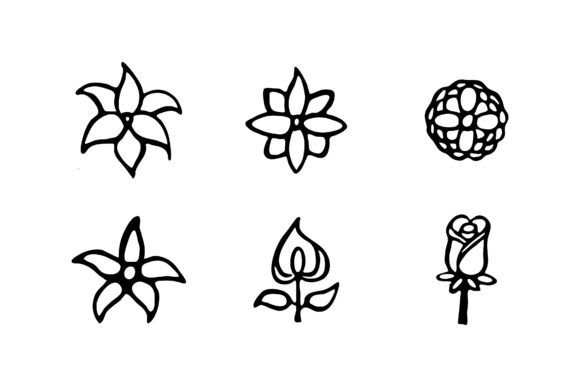
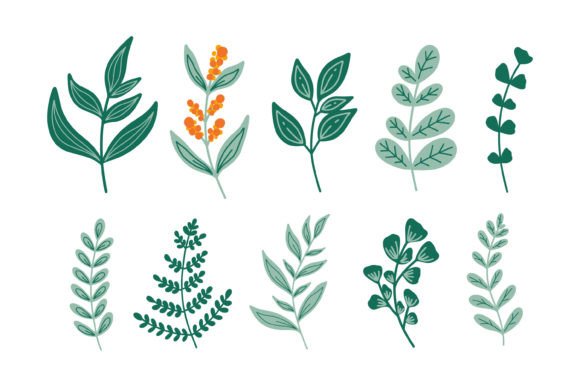
Opening Hand Draw Botanical Cliparts. Floral Ele feels like flipping through a well-loved sketchbook—soft pencil lines, gentle curves, and botanical shapes that breathe rather than shout. These aren’t stiff clipart florals; they’re hand-drawn with intentional imperfection: slightly uneven stems, petals that taper naturally, leaves with subtle asymmetry. The mood is calm, earthy, and quietly elegant—perfect for a boutique baby onesie, a linen tea towel for a local café, or an embroidered patch on a handmade denim jacket. As a designer who’s stitched hundreds of client projects, I immediately sense this set leans into *presence*, not flash. It won’t dominate a garment—it’ll invite closer looking.
Real Project Test: A Linen Tote Bag for a Local Florist
I pulled one of the larger floral motifs—a trailing vine with small blossoms—and digitized it for a 5” x 7” hoop on medium-weight natural linen. Why this combo? Because Hand Draw Botanical Cliparts. Floral Ele thrives where texture and subtlety meet. On the tote, the design stitched cleanly: satin-stitched petals held their shape, fill-stitched leaves stayed breathable (no puckering), and the running-stitch stems gave just enough definition without stiffness. Customers noticed—not because it screamed “look at me,” but because it felt *intentional*. One buyer said, “It looks like something my grandmother might have sketched.” That’s the quiet power of this set: it supports storytelling, not just decoration.
Where It Shines (and Where to Pause)
Hand Draw Botanical Cliparts. Floral Ele excels in projects where authenticity matters more than precision:
- Custom apparel: Works beautifully on sweatshirts and relaxed-fit tees—especially when paired with low-density fill stitches and matte thread.
- Baby embroidery: Soft outlines and open negative space mean fewer dense stitch areas—ideal for delicate cotton knit onesies and burp cloths.
- Embroidered patches: The clean vector files (EPS, AI, SVG) scale crisply for both sew-on and iron-on backing, and the PNGs hold up in digital mockups for Etsy listings.
- Holiday & wedding gifts: Not overly festive or formal—just warm, timeless, and personal. Think monogrammed kitchen towels for bridal showers or linen pillow covers for baby showers.
- Small shop product branding: Use one motif as a subtle corner accent on packaging tags or as a watermark-style repeat on printable mockups.
But here’s where attention matters:
- Small hoop sizes (under 4”): Some motifs include fine tendrils or clustered buds—test stitch density first. What reads beautifully at 6” may blur at 3”.
- Textured or stretchy fabrics: Linen, terry cloth, and jersey need extra stabilizer support. The hand-drawn delicacy can get lost if the fabric shifts under needle pressure.
- Dark or black fabric: The thin line work benefits from high-contrast thread (e.g., ecru on charcoal). Avoid light pastels unless you’re using underlay stitching to lift detail.
- Curved surfaces (caps, curved pillow edges): Stick to simpler, bolder motifs from the set—not the most intricate vine variations.
- Frequent-wash items (tea towels, baby clothes): Confirm your stitch density isn’t so low that details fray over time. A balanced fill stitch with moderate underlay holds up best.
What It Adds to Your Finished Product—Beyond Aesthetics
Using Hand Draw Botanical Cliparts. Floral Ele doesn’t just add decoration—it adds credibility. When a customer sees that slight variation in petal width or the organic flow of a stem, they subconsciously register *handmade intention*. That builds trust far faster than a generic stock graphic. For Etsy sellers, that translates to higher perceived value and better reviews (“so unique,” “feels special,” “not mass-produced”). For craft fairs or local boutiques, it helps your booth stand out—not with loudness, but with cohesion and care. And for digital product sellers, the included vector and high-res PNG files make it easy to create clean, professional mockups that convert browsers into buyers.
Practical Embroidery Designer Notes Before You Stitch
Before committing to a client project or bulk production:
- Test the design on scrap fabric *exactly* like your final piece—same weight, weave, and color.
- Check thread color contrast in natural light *and* on-screen. What looks soft on white may disappear on oatmeal linen.
- Review stitch density in your embroidery software—adjust underlay and top stitch count if needed for your fabric type.
- Confirm your hoop size matches the motif’s widest point. Don’t force a 6” design into a 4” hoop without simplifying first.
- Zoom in on small details: are there any tiny loops or isolated nodes that might snag or break during stitching?
- Run a black-and-white mockup. Does the silhouette still read clearly without color cues?
- Compare how the motif behaves on light vs. dark backgrounds—some hand-drawn elements rely on tone, not just shape.
- Use cutaway or tear-away stabilizer appropriate for your fabric—especially important for the finer linework.
- Verify commercial use rights before selling finished items or bundling the files into digital products. Since these are Graphics in the Decorative Elements category, licensing terms should be confirmed directly with the seller.
Final Thought: A Design That Supports, Not Competes
Hand Draw Botanical Cliparts. Floral Ele isn’t a statement piece—it’s a thoughtful collaborator. It enhances the fabric it’s on, honors the maker’s skill, and deepens the connection between object and owner. Whether you’re stitching a personalized gift for a friend or building a cohesive line of small shop merchandise, this set gives you room to breathe, to refine, and to stay true to a quieter, more grounded kind of beauty. In a world full of sharp vectors and hyper-saturated graphics, that kind of restraint is rare—and valuable.