Easel Stand SVG Laser Cut File
A Design That Invites Quiet Creativity—Not Just Decoration
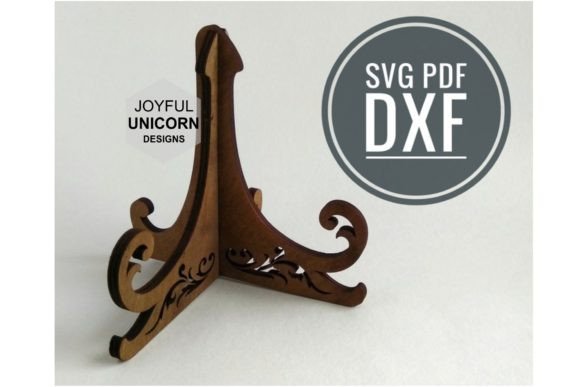
When I first opened the Easel Stand SVG Laser Cut File, I didn’t see just lines and vectors—I saw a pause button for busy hands. It’s clean, balanced, and gently architectural: two slender legs supporting a subtle crossbar, with space to hold a tiny canvas or photo. No florals, no script, no forced whimsy. Just quiet intention. That makes it unusually versatile for embroidery designers who value restraint over ornament—especially when building cohesive collections for boutique merchandise, nursery decor, or personalized gifts.
Where This Design Earns Its Place in Real Embroidery Projects
I tested the Easel Stand SVG Laser Cut File as part of a custom embroidered tote bag series for a local art supply shop. We paired it with minimalist typography (“Make Something Today”) and stitched it on natural canvas with matte cotton thread. The result? Customers paused mid-aisle—not because it shouted, but because it felt like a nod to their own creative rhythm. That’s the power of this file: it works as a standalone motif on sweatshirt cuffs, baby onesies, or tea towels, and also layers beautifully into larger compositions—say, as a central anchor in an applique design for a kitchen apron or a framed embroidery hoop display.
It’s especially strong for small business owners curating thoughtful product lines: think holiday embroidery kits (a tiny easel holding a mini “Merry” banner), wedding gift pillow covers, or Etsy seller branding elements (e.g., stitched subtly on the tag of a handmade ceramic mug). Because it reads clearly at 2.5–3 inches wide, it translates well across fabric types—linen napkins, brushed cotton baby blankets, even structured twill caps—without needing heavy fill stitch or dense satin borders.
What to Watch For Before You Stitch
- Hoop size & detail fidelity: The base legs taper slightly near the ground—those fine points can blur if stitched too small (<2 inches) or without proper stabilizer. Always test on scrap fabric first, especially for thin or stretchy fabrics like jersey or lightweight rayon.
- Fabric texture matters more than you’d think: On nubby linen or looped terry cloth, the clean geometry softens. That’s not bad—it adds warmth—but it does affect how crisp the finished product feels. If your brand relies on precision (e.g., modern monogrammed office totes), consider reinforcing with tear-away + cutaway stabilizer combo.
- Dark fabric contrast: Since the design is outline-driven, avoid low-contrast thread colors (e.g., charcoal gray on black denim). Stick with tonal-but-visible options—oatmeal on navy, heather gray on charcoal—or go bold with mustard or slate blue for visual lift.
- Curved surfaces & layered garments: Don’t place it directly over seams or shoulder yokes on sweatshirts. The straight-leg structure reads best on flat, stable zones—center chest, lower back, or centered on a pillow cover.
How It Shapes Perception—Beyond Just Stitching
Embroidery isn’t just about what’s stitched—it’s about what the customer *feels* when they hold it. The Easel Stand SVG Laser Cut File quietly signals care: careful spacing, intentional simplicity, and respect for negative space. That builds trust faster than ornate flourishes ever could. A client receiving a baby embroidery set with this motif stitched on a muslin swaddle knows you didn’t grab the first “cute” file off a bundle—you chose something that breathes.
For Etsy sellers and craft fair vendors, it elevates perceived value without increasing production time. Unlike dense fill-stitch motifs that eat up thread and machine time, this design stays efficient while looking deliberate. And because it sits comfortably in both “artistic” and “practical” categories (Decorative Elements meets Graphics), it fits cleanly into digital product previews, printable mockups, and social media flat lays—no awkward cropping or visual competition.
Designer Notes You’ll Actually Use
- Always extract the ZIP archive and inspect the vector paths before importing into your embroidery software—SVG files sometimes scale unpredictably depending on your platform.
- Check whether corners or junctions need manual cleanup: laser-cut files occasionally retain tiny overlaps or stray nodes that translate poorly to stitch logic.
- Run black-and-white mockups first—not just for color planning, but to assess visual weight. Does the easel “sit” firmly on the fabric, or does it float?
- Compare performance on light vs. dark backgrounds using your usual thread palette. A design this simple lives or dies by contrast.
- Confirm commercial use rights before listing finished products—this is a digital embroidery file, but licensing varies by seller. When in doubt, contact the creator directly.
- Pair it thoughtfully: it doesn’t need companion motifs, but if adding text, keep letterforms open and uncluttered (e.g., sans-serif block fonts, not tight script).
Final Thought: A Design That Supports—Not Steals—the Spotlight
The Easel Stand SVG Laser Cut File won’t dominate your portfolio—but it might become your most reached-for asset. It’s the kind of design that works behind the scenes: grounding a holiday embroidery collection, anchoring a boutique’s brand consistency, or turning a plain sweatshirt into a meaningful handmade product. It respects the craft, the customer, and the quiet confidence of doing less, but doing it well. Whether you’re stitching for joy, clients, or commerce, this one earns its place—not as decoration, but as intention made visible.