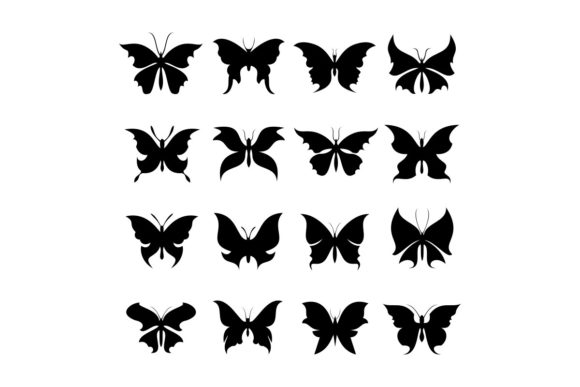
Butterfly Silhouettes Vector Graphics & Icon Review
When I’m scouting design assets for my next digital product release, I look for pieces that feel intentional, not just decorative. The Set of Butterfly Silhouettes Vector landed in my test folder last week, and I’ve been running it through the exact paces I use before committing a graphic to a paid listing. As a seller who creates everything from sublimation transfers to Canva templates, I need to know whether a file performs as a clean cut line, a scalable clipart element, and a thumbnail-worthy focal point. This set promises a lot—EPS, AI, SVG, and a preview JPG—so I spent a morning pushing it into mockups, font pairings, and a few tricky Cricut test cuts. Here’s what I found, and what it means for your shop.
First Impression and Visual Personality
Opening the vector files, the mood is instantly elegant and airy. The silhouettes aren’t overly cartoonish or childlike; they sit in that delicate, nature-inspired niche that attracts buyers planning weddings, garden parties, or spring-themed stationery. Some shapes are minimal with smooth, rounded wings, while others carry fine inner cutouts that suggest a more intricate, premium look. The collection feels cohesive, which matters if you’re building a themed bundle. I could see this working for a feminine brand identity, a boho sticker pack, or a series of botanical wall art prints. The black solid fill is classic, but because everything is vector, you can recolor in seconds—a pink gold gradient, a soft lavender, or a matte navy, depending on the product you’re mocking up.
From a buyer psychology angle, butterflies have a consistent, almost nostalgic appeal. They don’t trend hard and fade; they hover in the background of seasonal sales, from Mother’s Day gifts to summer festival merchandise. The silhouettes feel timeless, which is a plus when you’re stocking a digital product shop that needs to stay relevant year-round. The only slight risk is overuse—butterfly graphics are everywhere, so your creative execution has to lift the asset out of the generic. I’ll get to that.
Testing the Silhouette Set for Product Mockups
Before I ever upload a file to my shop, I mock it up on a minimum of four product types. For this set, I chose a tote bag, a ceramic mug, a greeting card, and a wall art print. The Set of Butterfly Silhouettes Vector performed beautifully on large surfaces. On a tote bag, a single butterfly centered with a delicate serif font underneath looked like a premium boutique item. For the mug, I scaled two silhouettes down and placed them near the handle—the curves followed the body of the mug naturally, and the SVG artwork stayed crisp even at a small size. The greeting card mockup was where the set truly shined: I layered a subtle watercolor texture behind one silhouette, added a thin gold border, and paired it with a classic script font. The result felt handmade and high-end, exactly the kind of listing that gets saved to a buyer’s favorites.
On the printable wall art side, I tested a 16x20 inch version. The EPS file opened without any clipping path issues, and the outlines were perfectly smooth, no jagged bezier curves. I tried a dark background with a gold-colored butterfly, and the contrast was stunning. That’s the beauty of a vector silhouette: you’re not locked into a single color scheme. For print-on-demand sellers, this flexibility is essential because you’ll need to adapt the same design across different product colors and materials.
Where Butterfly Silhouettes Shine in Digital Products
After several hours of testing, I’d confidently place this set in the following product categories:
- SVG designs for Cricut and Silhouette projects – with a caveat I’ll explain below.
- Printable wall art – especially for nursery, boho decor, or minimalist galleries.
- Greeting card and invitation templates – the silhouettes add a delicate, professional touch without overwhelming the text.
- T-shirt and tote bag graphics – bold enough to stand alone, elegant enough to pair with a quote.
- Tumbler wraps and mug designs – the curved shapes complement cylindrical objects well.
- Canva templates – drag‑and‑drop friendly, and easy to recolor inside the platform.
- Social media graphics – use them as decorative corner accents or post dividers for a cohesive brand look.
- Scrapbooking kits and digital paper packs – they work as subtle overlays or repeating patterns.
In terms of thumbnail appeal, a silhouette graphic has a distinct advantage: it’s high contrast by nature. When a buyer scrolls through a sea of colorful clipart, a clean, well‑placed black silhouette on a white or soft pastel background can actually stop the scroll. That’s a real click‑through opportunity for Etsy or Creative Fabrica listings.
Potential Pitfalls for Cricut and Print Projects
Here’s the honest part. Not every silhouette in this set is equal for small‑scale cutting. I loaded the SVG file into Cricut Design Space and cut a few shapes on standard cardstock. The simpler, solid‑wing butterflies cut cleanly, even at 1.5 inches. But the more intricate designs, with tiny wing cutouts and slender antennae, became problematic below 2 inches. The fine details either tore or didn’t weed cleanly. If you’re selling these as part of a sticker sheet or a tiny decal bundle, you need to test each shape individually and possibly simplify the path for the smaller sizes. For vinyl decals on tumblers or larger sticker designs, the detail held up fine, so it’s really about scaling with intention.
Another point to watch: when you place a dark silhouette on a dark background, the contrast vanishes. Recolor the silhouette to a lighter shade, or outline it if you want it to pop. Also, if you’re creating text‑heavy templates, like a menu or a flyer, be careful not to overcrowd the layout. The butterflies are ornamental, and they work best when they have room to breathe. A cluttered composition can make your product look amateurish, even if the asset itself is high quality.
Style Pairing and Font Combinations
To get the most out of the Set of Butterfly Silhouettes Vector, I tested it with several font families. My favorite pairings included:
- Serif fonts (like Playfair Display or Cormorant) – creates a timeless, editorial feel perfect for wedding invitations.
- Sans serif fonts (like Montserrat or Raleway) – a clean, modern look suited for minimalist branding and social media templates.
- Script fonts (like Great Vibes or Allura) – romantic and flowing, ideal for greeting cards and nursery wall art.
- Handwritten fonts – adds a personal, casual warmth for scrapbooking or memory‑keeping products.
- Display fonts – a bold pairing that works for merchandise like tote bags or t‑shirts when you want the graphic to be the hero.
I also played with placement. Centering the butterfly above the text felt balanced, but offsetting it to the side and letting the typography wrap around created a more dynamic, editorial layout. Small details like that can elevate a simple template into something that feels custom‑designed.
File Format Checklist for Commercial Use
This set includes EPS, AI, SVG, and a JPG preview. The EPS and AI files are compatible with all major vector software, which is a huge selling point for customers who are not locked into Adobe. The SVG is ready to import into design spaces and editing apps. The JPG preview is handy for quick mockup placement without opening heavy software, but it’s not a high‑resolution raster file for printing—it’s clearly meant as a reference. That’s fine, but I’ll note it in my product description so buyers don’t expect a 300 DPI printable JPG.
Before you sell any finished product that incorporates this asset, verify the commercial license. The product description says “just enjoy it,” which is ambiguous. I always assume I need to check the original source’s terms. If you’re selling physical products or digital downloads where the graphic is the primary value, you may need an extended commercial license. I recommend keeping a record of the license and, if you’re bundling the silhouettes, not redistributing the core vector files as‑is. Your customers should receive a finished design, not the editable source, unless you have explicit permission.
Testing Before You Publish: A Real-World Process
I never launch a new product without a quick validation run. For this set, I created a small sample collection: a “Spring Butterfly” mug design, a set of 3 digital wall art prints, and a Canva template for a baby shower invitation. I listed them as draft listings on my test shop and asked a few fellow sellers for feedback. The mug design got the strongest reaction—people loved the crisp, clean silhouette paired with a short, handwritten‑style quote. The wall art prints felt a bit plain until I added a subtle watercolor wash behind the butterflies, which instantly made them look more premium. The invitation template was the easiest to build; the silhouettes fit naturally into the corner spaces and left plenty of room for text.
One thing I learned: when I used the same butterfly silhouette across all three products, it created a subtle brand coherence. A buyer who saw the mug might later recognize the wall art style. That kind of visual consistency can build trust and encourage multi‑item purchases.
Final Thoughts from a Seller’s Perspective
The Set of Butterfly Silhouettes Vector is a solid, versatile graphic design asset that fills a specific niche elegantly. It’s not a revolutionary clipart bundle, but it doesn’t need to be. For digital product creators who already sell in the nature, wedding, or boho decor space, it’s a time‑saving addition that can be dropped into new collections quickly. The vector quality is high, the file organization is straightforward, and the ability to recolor gives you endless adaptation options. The main risks—intricate cut lines for small Cricut projects, potential overuse, and the need for a clear commercial license—are manageable with a bit of testing and transparent listing descriptions.
If you’re preparing a seasonal spring launch, a set of printable party decorations, or a line of minimalist apparel, this butterfly set can help you build a professional, cohesive product line without starting from scratch. Just be sure to test it on your specific mockups, pair it with thoughtful typography, and present it in a way that feels fresh, not generic. In a crowded marketplace, a well‑used silhouette can still make a quiet, elegant statement.