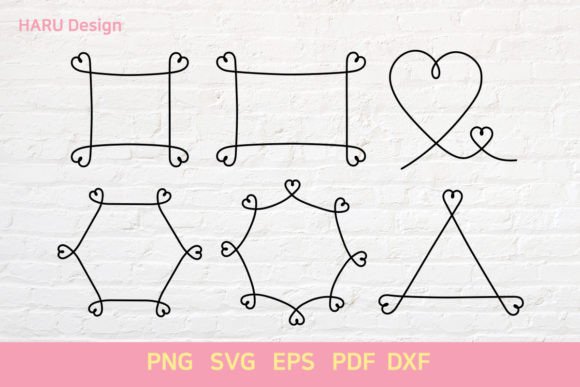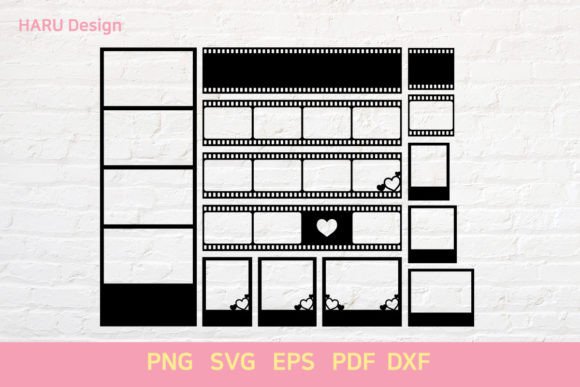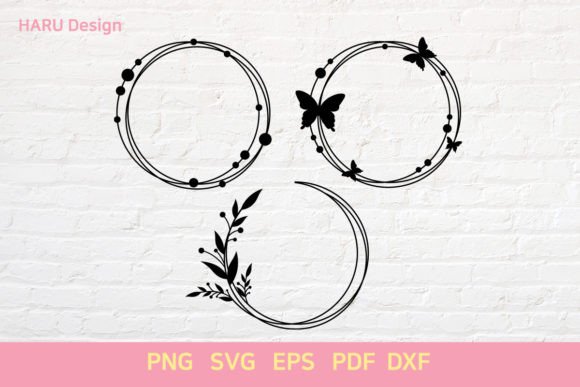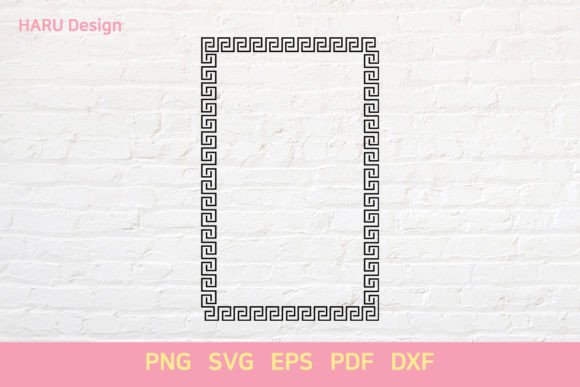
Border Frame: Decorative Elements Graphics for Digital Sellers
As someone who’s launched over 200 digital product listings across Etsy, Creative Fabrica, and Shopify—and shipped thousands of print-on-demand items—I opened Border Frame expecting utility, not just aesthetics. What stood out first wasn’t its polish (though it’s clean), but its intentionality: this isn’t a filler graphic. It’s a purpose-built decorative element designed to elevate real commercial work—not just look pretty in a preview.
The mood is quietly confident: modern with subtle organic flow, balanced enough for feminine branding but structured enough for minimalist or boutique packaging. It leans elegant rather than playful, refined rather than rustic—so it fits wedding stationery, luxury planner kits, or premium nursery art more naturally than cartoonish greeting cards or loud t-shirt graphics. That doesn’t mean it’s stiff—it has breathing room, gentle curves, and consistent line weight that translates well across scales and mediums.
I tested Border Frame across six live product scenarios before finalizing a listing: a Canva invitation template pack, a Cricut-ready sticker sheet for planners, a sublimation bundle for mugs and tumblers, a printable wall art set for Etsy, a seasonal digital paper pack (spring-themed), and a social media story template kit. In every case, it served as both anchor and accent—framing photos, wrapping text blocks, defining section breaks, or adding visual rhythm to layouts without competing for attention.
Its versatility comes from the file suite: one high-res SVG with clean vector paths (ideal for Cricut and Silhouette cutting), one EPS for Illustrator users, one transparent-background PNG at 300 DPI (perfect for Canva, blog graphics, and mockups), one print-optimized PDF (great for client handoffs or physical packaging design), and one DXF for laser-cutting or CNC workflows. All files share a consistent 12×12 inch artboard—making scaling predictable and thumbnail previews instantly recognizable.
Where Border Frame shines most is in product presentation. On Etsy, I used it to frame mockup images of my planner stickers—immediately improving perceived value and click-through rate. For Canva template sellers, it adds instant cohesion to multi-page designs without requiring custom layout work. In printable wall art collections, it creates continuity across themed sets (e.g., matching borders for botanical prints and quote art). And for small business branding, it supports visual hierarchy: use it to highlight key offers in email headers or social media banners while keeping focus on your message—not the frame itself.
It works especially well in large-format previews (think 3000×3000 px listing banners), themed bundles (e.g., “Elegant Wedding Kit” or “Modern Planner Bundle”), and decorative layouts where whitespace matters. As a graphic design asset, it enhances digital downloads by making them feel curated—not assembled. As a commercial design, it strengthens brand identity when applied consistently across packaging design, blog graphics, and promotional visuals.
But it’s not universal. I paused twice during testing: once when placing it on a dark background (the thin strokes faded unless adjusted), and again when layering it over busy patterns (it lost definition). It’s also not ideal for tiny sticker details—its delicate inner lines don’t hold up below 1.5 inches wide in physical cut files. Avoid using it in text-heavy templates where it might distract from readability, or in low-resolution print products like basic postcards where fine vector detail won’t render cleanly. And if you’re selling Cricut projects, always verify cut quality on your machine first—some blade settings require minor path simplification.
Here’s what I did before publishing:
- Test-print the PNG on matte and glossy paper to check contrast and color fidelity
- Preview the SVG in Cricut Design Space with actual material settings—not just on-screen
- Drop the transparent PNG into a Canva mockup with both serif and sans serif fonts to assess visual harmony
- Check how the border reads at 150×150 px—the standard Etsy thumbnail size
- Verify transparency in the PNG using a dark background layer in Photoshop
- Confirm the commercial license allows finished product resale (it does—no attribution required)
- Organize customer files clearly: “Border_Frame_SVG”, “Border_Frame_PNG_300dpi”, etc.—no ambiguity
Font pairing mattered more than I expected. With script fonts, Border Frame softened the formality; with bold display fonts, it added balance. It held up equally well beside handwritten, serif, and geometric sans serif styles—proof of thoughtful proportion and spacing.
For creative entrepreneurs building scalable digital product lines, Border Frame isn’t just another clipart download. It’s a reusable design asset that reduces repetitive layout work, improves perceived professionalism, and supports cohesive storytelling across platforms. Whether you’re launching your first Etsy shop or refreshing a decade-old POD catalog, it earns its place in your core toolkit—not as decoration, but as infrastructure.
If you sell printable design, SVG design, or social media graphics, treat Border Frame like a reliable team member: test it early, pair it intentionally, and let it do quiet, consistent work across your digital product ecosystem.