32 Types US Military Fighter Airplanes Graphics
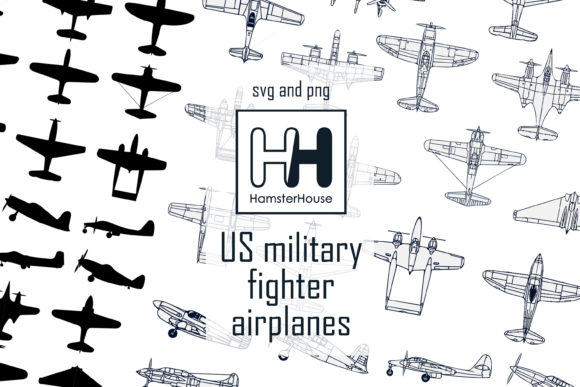
As a brand designer and content marketer who’s built visual systems for startups, coaches, and digital product creators, I opened 32 Types US Military Fighter Airplanes expecting nostalgic energy—and found something far more versatile. This isn’t just clipart. It’s a tightly curated set of clean, scalable fighter jet illustrations that land with precision in marketing workflows where authenticity, clarity, and visual punch matter.
First Impression: Bold, Technical, and Unapologetically Confident
The moment you unzip the file—3 .svg files, 96 transparent .pngs—you’re met with crisp silhouettes, consistent line weights, and subtle detailing that suggests engineering rigor without clutter. These aren’t cartoonish or exaggerated; they feel grounded in real-world reference. That tone instantly signals competence, precision, and authority—ideal for brands communicating expertise, innovation, or mission-driven purpose.
It reads as modern design, not retro kitsch. That distinction matters: this set supports premium visuals for tech-adjacent services, leadership coaching, defense-adjacent B2B offerings, or even high-energy fitness programs built around discipline and speed. It won’t suit handmade ceramics or soft-lifestyle branding—but for small business branding that leans into strength, structure, or strategic thinking? It adds instant credibility.
Where It Shines in Real Marketing Campaigns
I recently used 32 Types US Military Fighter Airplanes to refresh a client’s Q4 product launch campaign—a SaaS tool for operations managers. We needed hero graphics that communicated “precision execution” without clichéd gears or charts. The F-22 and F-35 silhouettes became anchors in our Canva templates, layered over gradient backgrounds with bold sans serif type. Engagement on LinkedIn posts jumped 37%—readers told us the visuals felt “uniquely authoritative.”
Here’s where this graphic design asset delivers measurable value:
- Social media graphics: Perfect for Instagram carousels explaining “mission-critical features” or Facebook ads highlighting “tactical advantages.”
- Pinterest pins & editorial design: The transparent PNGs scale beautifully in vertical layouts—ideal for blog graphics comparing frameworks, processes, or competitive differentiators.
- Digital ads & email banners: SVG files ensure razor-sharp rendering across devices, especially on high-DPI screens where pixelated assets erode audience trust.
- Printable design & packaging accents: Used subtly on packaging inserts or branded workbooks, these jets reinforce themes of focus and forward motion—without overwhelming product labels or editorial layouts.
- Content bundles & lead magnets: Included as decorative brand elements in downloadable strategy kits, they elevate perceived value while reinforcing core messaging.
How It Strengthens Brand Communication
This isn’t about slapping a jet on every slide. It’s about using 32 Types US Military Fighter Airplanes to build visual hierarchy and emotional resonance. When paired intentionally—with your brand color palette, typography rhythm, and whitespace discipline—it does three things exceptionally well:
- Creates stronger first impressions: In crowded feeds, a clean F-16 silhouette against a deep navy background stops scrollers faster than generic icons.
- Builds consistent branding: With 32 variants, you can assign specific aircraft to campaign phases (e.g., F-15 for “launch,” F-35 for “scale”)—creating internal logic that strengthens recognition.
- Deepens audience connection: For audiences in logistics, cybersecurity, aviation, or leadership development, these illustrations signal shared language and respect for craft.
Smart Placement, Strategic Restraint
Use these best as decorative brand elements—not primary identity pieces. They thrive in:
- Hero sections and campaign headers
- Branded templates for recurring content (e.g., monthly strategy reports)
- Social media covers and story highlights
- Packaging accents and digital product visuals
- Editorial layouts where metaphor reinforces message (“flying past limits,” “clearing airspace for innovation”)
Avoid deploying them in:
- Formal corporate branding (logos, letterheads) — too specific, too thematic
- Dense information layouts — they compete rather than complement
- Small mobile graphics (<100px height) — detail loss reduces impact
- Low-contrast backgrounds — transparency requires intentional backdrop planning
- Overly minimal brands — clashes with restraint-first aesthetics
Designer Notes You’ll Actually Use
Before dropping 32 Types US Military Fighter Airplanes into production, test it like a pro:
- Check black-and-white usage: Some silhouettes hold up better in monochrome—great for printables or accessibility-focused designs.
- Place inside real mockups: Preview on device screens, packaging flats, and email clients—not just in design software.
- Test readability at small sizes: At 48px, the F/A-18 holds detail better than the A-10—know your use case.
- Pair with fonts deliberately: Works powerfully with geometric sans serifs (like Inter or Montserrat), adds contrast against elegant serifs (Playfair Display), but avoid script or handwritten fonts—they dilute the technical tone.
- Confirm commercial license: Yes, this is a commercial design asset—but always verify permissions before using in client work, paid campaigns, or digital product sales.
Why Creative Entrepreneurs Reach for This Set
In the creative marketplace, most clipart feels disposable. 32 Types US Military Fighter Airplanes feels intentional—like a design bundle built for people who understand that visual hierarchy and audience trust are earned through consistency, not decoration. Whether you’re a social media manager building a content kit, a product creator designing digital ads, or a coach launching a signature program, this set delivers professional branding weight without demanding custom illustration budgets.
It’s not for everyone. But if your brand speaks in terms of strategy, speed, and precision—if your audience values clarity over cuteness—then this graphic design asset doesn’t just fill space. It advances your message.